Wednesday, May 4, 2011

Dive Aqaba

DSCF6802DSCF6798DSCF6804DSCF6842DSCF6890DSCF6896
DSCF6933DSCF6935DSCF6993DSCF7005DSCF7008DSCF7013
DSCF7066DSCF7081DSCF7098DSCF7101DSCF7105DSCF7114
DSCF7121DSCF7131DSCF7137DSCF7140DSCF7144DSCF7145

Dive Aqaba, a set on Flickr.

Dive pictures from our trip to the Red Sea, Aqaba, Jordan

Monday, May 2, 2011

Rum Stars

For those of you wondering what it was like to live with the Bedouins of Wadi Rum, this movie gives a nice overview.  Our pictures will be posted later.


Discover the desert of Wadi rum with Rumstars by parisval2010

Sunday, May 1, 2011

All Hashemite Proud

Believe in God
Love your country
All Hashemite Proud
--sign on a school outside of Wadi Musa in Jordan

We just returned from a week's vacation in Jordan.  It was a real adventure.  I must say that when I was in high school doing a short assignment on Jordan's role in the Middle East peace process, I never thought that one day I would be actually traveling in that country and meeting Jordanians face to face.  As a Middle Eastern country, its fortunes fluctuate with the perceived security of the region and the "Middle East" is never very high on an American's tourist roster.
This year, tourism to Jordan is especially suffering in the wake of the Arab Spring uprisings in Egypt, Libya, Syria and Yemen.  As Jordanians are quick to point out, Jordan is a completely different country, ruled by a benevolent king, a written Constitution, and British parliamentary system with free elections.  Even the US State Department thinks that Jordan is the most stable country in the region--ranking above Israel in terms of security and travel warnings.  Jordanians are such a tight-knit society that everyone knows everyone's business and they are all fairly happy under King Abdullah II whom they believe has the best interest of the people at heart in all of his decisions.  As long as the king loves his people and will act for them there is no need to overthrow the government.
Jordanians are very proud of their country.  Countless people on the street asked us where we were from and when we said "US" replied with a hearty "Welcome to Jordan!  You are most welcome here."  Sometimes they wanted to sell us things but other times they were just friendly strangers passing the time.  Their unequivocal love of country was almost disarming in its sincerity.  On the one hand, it was like the whole country was working for the tourist bureau, and on the other it was completely guileless. When I return to the states and meet a foreign tourist I will tell them that they are "most welcome to the US" and see how they react.
More people should travel to Jordan.  It is a beautiful country and the people are some of the nicest that I have met in the world.  The king is taking steps to modernize the country, such as building tourist promenades, improving taxi cabs and enforcing education up to the age of 16, even for the Bedouins.  He has brought the internet and satellite TV to Wadi Rum and with tourism grows the connection between East and West.  The people are so happy that there is no fertile soil of discontent that feeds the revolutions sweeping the rest of the Arab world.  The future looks bright for Jordan.

A story: On our first day in Jordan we did a dive to the wreck of the Cedar Pride which is a purpose-sunk freighter (sunk by the king) just off of a popular beach.  As I was exiting the water, a little girl about 8 years old ran up to my dive master and said something to him.  He turned to me and said, "she wants to take a picture with you."  I turned around (in full dive gear) and posed with her while her mother in a long Muslim dress with headscarf stood in the surf and took the picture.  The little girl ran away beaming.  If a little girl in Jordan can dream of SCUBA diving, the people have a future.

Thursday, April 21, 2011

Wednesday, April 20, 2011

Stuck in the Middle: Thoughts from Armageddon

You cannot understand Israel without understanding the role of the land, and you cannot understand that land until you understand its geographical context--a context from which modern Israel has largely divorced itself or which has divorced itself from Israel (depending on your politics).


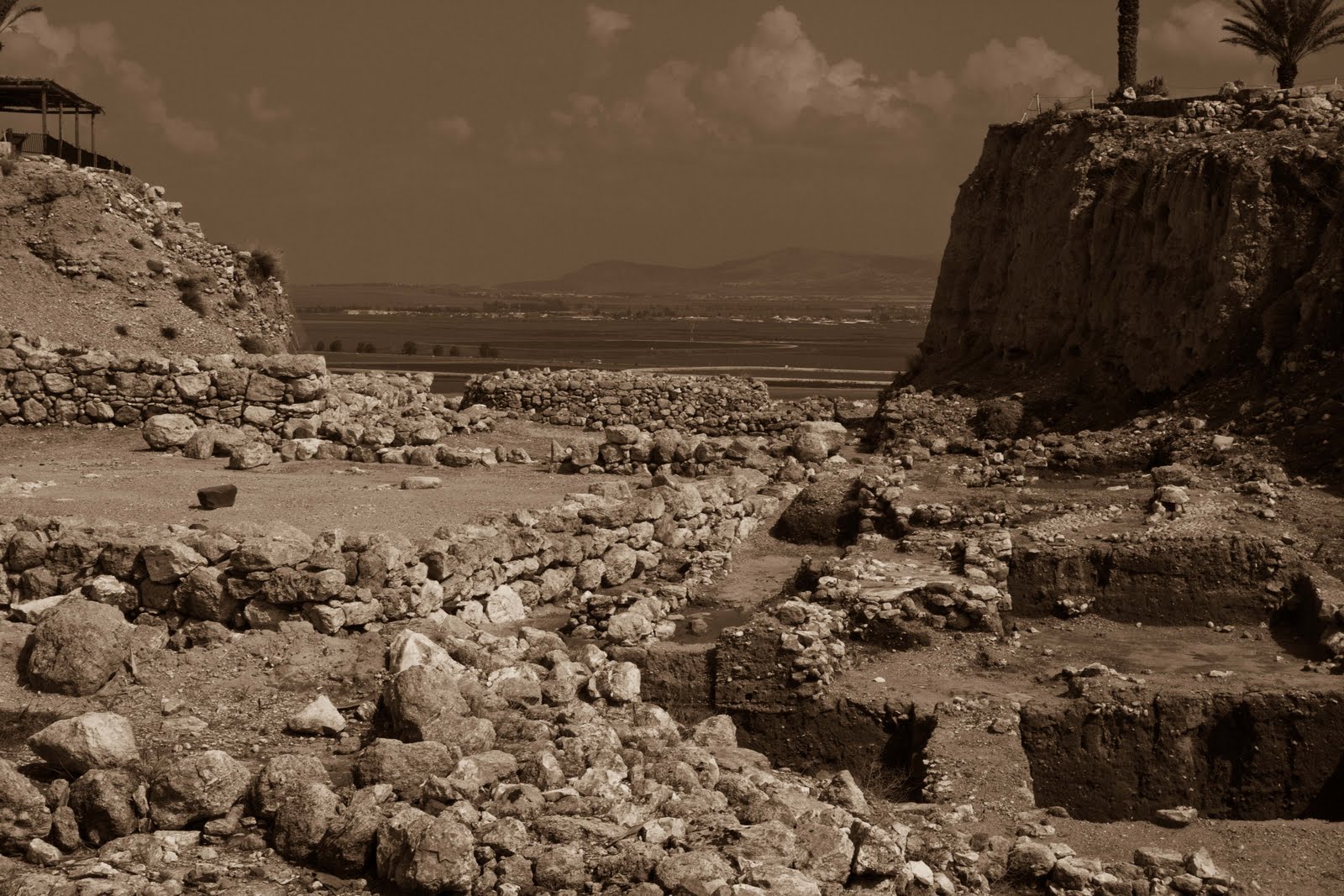
First, you have to get out of your head the very modern idea of nation states.  For a good part of human history, association was based on geographic proximity: family, tribe, city, kingdom, empire.  The "border" was wherever the influence of a family, tribe, king, or emperor waned and was superseded by a different family, tribe, king or emperor.  These areas of influence, usually commanded from a central settlement or city state, were linked by trade.  Often, as in the case of the ancient cities that survive today, they were located at the hub of a major trade route where merchants could sell, trade or purchase goods that they could carry with them to the next city.  No matter how homogeneous a city's population might be, the influx of traders kept up the exchange of foreign ideas and foreign goods.  Cities along these trade routes grew wealthy with such luxury goods and taxes and thus became attractive to other cities or kings looking to expand their circle of influence.  This explains the city of Megiddo which we know today as Armegeddon (a Greek corruption of the Hebrew Har Megiddo which means Mount Megiddo).


This map showing the ancient caravan routes to Babylonia also shows the convergence of several routes of trade in the land of Canaan, and especially at Mount Megiddo.  Megiddo overlooked the main north-south thoroughfare of middle eastern trade.  Go north from Megiddo and you would reach the rich city of Hazor and then Damascus or deviate towards the coast and you could ship goods out of Akko or you could trade with the Phoenicians in Tyre.  Go south and you could reach the Mediterranean ports of Gaza and further south, Egypt.  Boats on the Red Sea or the Persian Gulf could then access the wealth of India and China for spices and silk.  Canaan was at the center of it all.


It was straight into the middle of the ancient world that God decided to put the Israelites.  The promised land was the center of commerce, the buffer zone between empires (Assyrian, Egyptian and Babylonian) and pivotal to the security of the region's trade.  The fact that it was dominated by one ethnic tribe that absolutely refused to assimilate to the surrounding cultures must have been especially galling.  By promising the Israelites land that was already occupied by other pagan cultures, God illustrated his supremacy and made sure that all the other people got the message.  News of the Israelite conquest under Joshua spread far and wide as other powerful kings of Canaan either were either slaughtered by or made subject to the upstart tribe from the desert. This tribe was different.  It did not make peace with its neighbors.  It did not intermarry.  It prayed to one invisible god.  It was set apart.


File:OldWorldMapNearJerusalemCityCouncil.JPG
The Jewish presence in the centrally located land was the source of great conflict.  Jerusalem, "Abode of Peace," has been destroyed twice, besieged 23 times, attacked 52 times, and captured and recaptured 44 times. (As the German map illustrates, in terms of commerce, Jerusalem was at the center of the world). Subsequent conquering empires decided that the only way to control the Israelites was by forcibly removing them from the land--a policy followed by the Assyrians, the Babylonians and, eventually, the Romans.


When the British announced in the Balfour Declaration of 1917 that they would "support the establishment in Palestine of a national home for the Jewish people," they once again introduced conflict to the region.  This time the Jewish people's presence in Palestine severed the links between Arab states.  It was not the Canaanites but the Palestinian Arabs who were the "people in the land."


Standing on Har Meggido, looking out across the peaceful valley, I can see several minarets in the neighboring hill towns.  One exit down the highway is the West Bank.  Could this be the great battleground at the end of the world?  As the people here become more entrenched in their separateness (divided by religious practices, language, ethnicity, culture and history), conflict seems inevitable. I hope I'm wrong.

Monday, April 18, 2011

Happy Passover--No Bread for You!

Tomorrow marks the beginning of spring break in Israel, but it already feels more like summer.  Unlike in the US where spring break is about as nonreligious a holiday as you can get, in Israel spring is tied to Passover, which the Christians then tie to Easter.  Since Passover follows the lunar calendar, it jumps around and this year it's pretty late into April, hence the summer-like feeling.  Temps are soaring into the mid 80's as families and teenagers crowd the beaches.  School got out last week and won't be back in session until 4/26.  So, on the surface of it, the holiday looks very American.

However, as with everything in Israel, it's what's below the surface that matters.  I haven't written about food in Israel yet because it is one of the most annoying things about life in this country.  It's a democracy so as a person living in Israel I have a right to eat or not eat whatever I like.  However, to eat a bacon cheeseburger in Israel you have to first find the bacon, which feels like trying to buy drugs on the black market.  I'm told by other more experienced ex-pats that you can find Arab Christian butchers on a street in Haifa who will cut you a nice slab of pork, but I have yet to see a slaughtered pig anywhere--maybe they keep them in the back room.

The reason why you will not find any pork or clams or lobsters or scallops or other tasty things in your local supermarket has everything to do with kosher dietary laws which restrict the sale of non-kosher items in any store that also wants to carry kosher ones.  It's a zero-sum game.  In order to be kosher, the item must not be kept in the same room as anything non-kosher.  A supermarket that wants to be kosher cannot allocate one half to serve the kosher patrons and one half to serve non-kosher.  Anything non-kosher in the entire store renders the other items non-kosher.  This is also the reason behind the yummy subsidized lunches at the cafeteria.  If the cafeteria controls what I eat in the dining hall and the cafeteria cooks according to kosher laws, everything is kosher.  If I brought a cheeseburger in my lunch box to the cafe (forget the bacon this time--you can't mix meat and dairy), it would render the entire cafeteria non-kosher and offend 15 orthodox Jews--so that's out of the question.  So now that you understand what kosher is, please understand that in Passover, kosher goes into hyperdrive.

Way back in the days of the exodus when the Israelites had camped at the base of Mt. Sinai, Moses told the assembled crowd to commemorate their escape from slavery in Egypt by holding a yearly feast of Passover.


In the first month, on the fourteenth day of the month between the two evenings is the lord's Passover. And on the fifteenth day of the same month is the feast of unleavened bread unto the lord; seven days ye shall eat unleavened bread.  (Leviticus 23:5)

This practically means that the Jewish people are to eat no leavened bread for seven days.  I'm sure you've seen the Matzo cracker that substitutes for bread during this week, and although my Israeli coworkers lament that it is the most terrible thing to be forced to eat, it doesn't taste that bad.  Okay, so Matzo is like the Thanksgiving turkey (appearing once a year and lasting for seven days :-), not so bad.  But this is where the lawyers take over.  Different rabbinical schools have different interpretations "unleavened bread" so they created the classification of "chametz" for "leavened" food which is banned.  Chametz is anything made with five types of grain and anything left to ferment or rise.  That means in addition to no bread or pitas, there is no pasta, no couscous, no barley, no oats and no wheat products (flour) in the supermarkets.  There is no beer since beer is fermented (big no) wheat (double no).  Rice is borderline and possibly a yummy substitute for Matzo for the kids.  It sneaks in because although a grain, it was not cultivated in the land of Israel at the time of the exodus.  Cakes are also banned, unless flourless chocolate, and depending on the orthodoxy, chemical leavening is suspect.  Eggs and potatoes are permitted and so feature heavily in the Passover dishes.

But wait, there's more!  Since the Torah explicitly says the Israelites are supposed to remove every crumb of leavened product from their houses, modern interpretation is that non-chametz products such as jam, if made in a factory that also produces chametz, also becomes chametz-contaminated.  So the grocery stores will carry dual inventories of jam.  The chametz-contaminated one goes under the sheets "for sale the rest of the year" and the one produced in a clean factory is sold expressly during Passover.  You cannot purchase items from out from under the sheets, as we were warned by the checkout lady on Friday.  "There will be no bread."

What's a good Christian to do?  We shopped like we were going camping for forty days in the desert.  Stocking up on loaves of bread, pastries, cookies,  pasta, couscous, beer, we filled the shopping cart.  Our fridge has never been so full.  All of my coworkers and ex-pats told us, go shopping, stock the fridge.  If you don't you'll be stuck eating Matzo.  As aforementioned, Israel is a democracy.  As a  "goy" I can eat chametz during Passover--I just have to find it.

For more about chametz, check out this wikipedia article.
http://en.wikipedia.org/wiki/Chametz
I would say it was made up or exaggerated except that my Israeli cross-cultural trainer told me personal stories about searching out crumbs of chametz with a feather and a candle when she was young.

So now it's the night of the Passover Seder and all the families are gathered together for one big meal, like Thanksgiving.  The festival continues for a week which is all family time, like it or not.  We get two days off from work which is a nice thing and we are going to spend the vacation going to Jordan where alcohol will be harder to find, but bread will not.

I miss Easter!

Monday, April 11, 2011

A Land Flowing with Milk and Honey

I, like many who attended Sunday school as a child, learned that God gave to Israel "a land flowing with milk and honey," but I never stopped to think about what that meant other than a general idea of abundance.  Now, in the spring, living in one of the most fertile ares of the country, I think I have a better grasp of that description.  Milk and honey means lots of good pastureland filled with lots of flowers!

Before they could conquer Canaan, the Israelites were forced to wander in the desert for 40 years, until everyone that had been of military age when they left Egypt had passed away.  This was God's punishment for their cowardice because upon scouting out the land that was good but occupied, the Israelite spies lost faith in an easy victory and tried to persuade the people with lies, telling them that they were better off in the desert.
 
I spent two days in the desert in southern Israel and I can't imagine spending 40 years there.  It is brown and dusty even in springtime.  There is nothing green except small bushes growing in the dry stream beds or wadis. Food is scarce and water is scarcer, bubbling up in springs, but not flowing far.  It is quiet and completely desolate and completely safe from other people.  It is my opinion that the Israelites were not so much lost in the desert as hiding out in it.

So contrast that with the "promised land," the good land of Canaan.  Here's a picture of the Jezreel Valley in the lower Galilee, where the Canaanites had their royal city of Megiddo.  The land is flowing with milk and honey because it is incredible pasture land, filled with grasses for livestock and flowers for bees.  The Canaanites were famous horsemen and the rich plains of the Jezreel Valley enabled them to keep a well-provisioned cavalry.
The flowers here are beautiful.  They carpet the hills in ever-changing colors like living works of art.  No one flower has dominance so each patch of land contains new and interesting combinations of color and form.  Here is just a small sample of the goodness of the land:


 The purple flower is Judean viper's bugloss (which has got to be the best name in the world!)


 Red flowers are corn poppies and purple ones are stork's bills
Not sure what the little pink ones are, but they are fabulous.  The red flowers here are crown anenomes and they are rare (no black center).

I wish I could just spend my days in the fields studying this profusion of color and texture, but, sadly, I need to go to work.  The flowers will be there next weekend.

As for my meditation, I think about what the Israelites wanted to give up on because they lacked faith in God.  If they had not trusted God for victory over much better fed, better trained and better provisioned armies they would have remained out in the dusty desert forever.  When they finally crossed over the Jordan into the territory controlled by Jericho, God said to Joshua three times, "Do not be afraid; do not be terrified."  This is great wisdom.  If fear overcomes your faith, you might miss the unexpected blessings of the good land.